nya casino sverige – vår guide till nya casinon 2026
nya casino sverige är en färsk aktör som redan fått uppmärksamhet för sin kreativa spelportfölj. Bakom plattformen står ett team med lång erfarenhet av branschen, vilket märks i både design och funktionalitet. I en allt mer konkurrensutsatt marknad blir nya svenska casino en viktig faktor för att skilja ut sig.
mines casino — spelleverantörer | mines casino
See also:
- Varför nya casino sverige online är populärt bland svenska spelare
- Bonusvillkor & Omsättningskrav för nya casino sverige
- Bilder: Så Ser Nya Rekommenderade Casinon Ut
- Reglering och nya svenska casino: Vad du behöver veta
- Vad ska du tänka på när du testar ett nytt casino med nya casino sverige online?
- Frågor och svar om nya svenska casino
- Verktyg för självtest och insättningsgränser hos nya casinon
Varför nya casino sverige online är populärt bland svenska spelare
Game shows, as a genre, represent a fascinating intersection of chance, skill, and human psychology, offering a microcosm of societal values where ordinary individuals are thrust into extraordinary circumstances. The format, deceptively simple in its core premise of questions, puzzles, or physical challenges, belies a complex production machinery designed to maximize tension, engagement, and emotional payoff. From the earliest radio quiz programs of the 1930s, where contestants answered trivia for modest prizes like a new refrigerator or a set of encyclopedias, to today’s multi-million dollar spectacles with elaborate sets, pyrotechnics, and celebrity hosts, the evolution of the game show mirrors broader technological and cultural shifts. The golden age of television in the 1950s brought us iconic shows like ‘The $64,000 Question’ and ‘Twenty-One,’ which, while immensely popular, were later revealed to be rigged, leading to a congressional investigation and a subsequent shift towards lighter, more comedic formats like ‘The Price Is Right’ and ‘What’s My Line?’ This scandal, however, did not diminish the public’s appetite for the genre; instead, it paved the way for a more self-aware, playful approach that emphasized entertainment over pure intellect. The 1970s and 1980s saw the rise of the syndicated powerhouse ‘Wheel of Fortune’ and ‘Jeopardy!,’ which remain cultural touchstones today, their formats so deeply ingrained in the collective consciousness that they are often referenced in other media. The mechanics of these shows are meticulously engineered: the spinning wheel’s random selection, the puzzle board’s reveal, the buzzer timing on Jeopardy!—all are calibrated to create moments of suspense and sudden reversals of fortune. Contestant selection is a rigorous process involving multiple rounds of interviews, personality assessments, and sometimes even lie detector tests, as producers seek individuals who are not only knowledgeable or skilled but also telegenic and capable of articulating their emotions under pressure. The casting directors look for a blend of relatability and eccentricity, favoring teachers, nurses, and small business owners who can serve as avatars for the audience, their triumphs and defeats resonating on a personal level. The psychological dynamics within a game show are equally compelling: the pressure of time constraints, the presence of a live audience whose reactions can influence decisions, and the immediate consequences of every choice create a state of heightened arousal that often leads to either brilliant strategic plays or catastrophic blunders. For example, in ‘Deal or No Deal,’ contestants must decide whether to accept a banker’s offer or continue opening briefcases, a dilemma that pits mathematical expected value against the fear of losing a guaranteed sum, resulting in visible emotional turmoil that is as compelling as any scripted drama. Similarly, in ‘Who Wants to Be a Millionaire?’ the lifelines—’Phone a Friend,’ ‘Ask the Audience,’ and ’50:50’—are not just tools but also social experiments, as contestants weigh the advice of strangers, friends, or probabilities, often revealing their own biases and levels of trust. The economic stakes of modern game shows are staggering; prime-time specials can offer prizes exceeding $10 million, funded by advertising revenue and product placement, which are seamlessly integrated into the show’s fabric, from branded podiums to host-pitched vacations. The production values have escalated to cinematic levels, with elaborate lighting rigs, augmented reality graphics, and immersive sound design that amplify the emotional beats, turning a simple reveal into a heart-stopping moment. Behind the scenes, a team of writers, researchers, and statisticians ensure that questions are fair but challenging, that difficulty curves are properly calibrated, and that the show’s pacing adheres to broadcast standards. The role of the host is pivotal; hosts like Bob Barker, Alex Trebek, and Pat Sajak became beloved figures through their warmth, wit, and ability to put contestants at ease while maintaining the show’s momentum. Their deaths or retirements have been treated as national events, reflecting the parasocial bonds forged over decades of daily viewership. In recent years, the genre has diversified to include reality-game hybrids like ‘The Amazing Race’ and ‘Survivor,’ which combine physical endurance, social strategy, and puzzle-solving in exotic locations, expanding the definition of what a game show can be. Streaming platforms have also entered the fray, with shows like ‘Floor Is Lava’ and ‘The Circle’ appealing to younger audiences through ironic humor and interactive elements, while still adhering to the fundamental appeal of competition and reward. The global reach of game shows is immense; formats like ‘Who Wants to Be a Millionaire?’ have been adapted in over 100 countries, each version reflecting local cultural norms—for instance, the Japanese version often features more complex puzzles and a greater emphasis on group harmony, while the British version is known for its dry wit and stricter time limits. Cognitive scientists and behavioral economists have studied game shows as natural experiments, using data from thousands of episodes to analyze risk aversion, the hot-hand fallacy, and decision-making under uncertainty. For instance, research on ‘The Price Is Right’ has shown that contestants often overbid in the showcase round due to anchoring on previous bids, and studies of ‘Jeopardy!’ have revealed strategic wagering patterns in Final Jeopardy that are not always rational. The educational potential of game shows is also significant; ‘Jeopardy!’
casino swish — bästa bonusarna | casino swish
Bonusvillkor & Omsättningskrav för nya casino sverige
- 47% upp till kr1500
- 31% bonus och 25 gratissnurr
- 11% upp till kr2000 och 75 gratissnurr
- 25x spelomsättning
- 25x insats inom 7 dagar
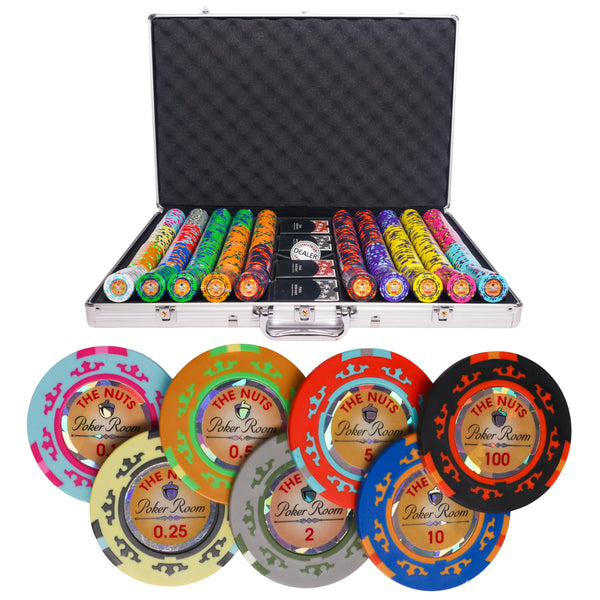
Bilder: Så Ser Nya Rekommenderade Casinon Ut
Reglering och nya svenska casino: Vad du behöver veta
variants of the same underlying algorithm, each distinguished by subtle shifts in parameter initialization, learning rate schedules, and loss function weighting, are routinely benchmarked against one another across a battery of standardized tasks. In practice, these variants often differ less in their theoretical guarantees and more in their empirical robustness to noise, gradient sparsity, and the specific geometry of the optimization landscape. Some variants adopt aggressive momentum terms that accelerate convergence on smooth basins but risk oscillation near sharp minima, while others favor conservative updates that trade speed for stability, particularly when the data distribution drifts over time. The choice of batch size, for instance, can transform a variant from a noisy stochastic approximator into a near-deterministic solver, and this sensitivity means that a variant that excels on image classification may falter on natural language processing benchmarks where the loss surface is riddled with flat regions and saddle points. Furthermore, the interaction between the variant’s architectural inductive biases and the regularization strategy—whether dropout, weight decay, or spectral normalization—can produce surprising synergies or catastrophic interference. In reinforcement learning settings, the same variant may be adapted with different exploration schedules, entropy bonuses, or target network update frequencies, leading to drastically different sample efficiency and final policy performance. Recent work has also highlighted the role of random seed selection in determining whether a variant lands in a favorable basin of attraction, prompting the use of multi-seed evaluations and statistical significance testing to separate genuine algorithmic improvements from mere luck. For production systems, engineers often maintain a portfolio of variants, each tuned for specific hardware constraints—such as memory footprint, latency, or energy consumption—and they deploy them via a meta-controller that selects the most appropriate variant based on real-time feedback from the environment. This meta-level selection is itself a learning problem, and some systems use bandit algorithms to explore the variant space while exploiting known best performers under changing conditions. The academic literature is replete with papers that propose a new variant, demonstrate its superiority on a handful of curated datasets, and then show that the gains diminish or reverse when the evaluation protocol is expanded to include adversarial perturbations, distribution shifts, or out-of-distribution examples. Consequently, the field has moved toward more rigorous evaluation frameworks, such as model zoos, leaderboards with hidden test sets, and cross-validated hyperparameter sweeps, to ensure that reported improvements are not artifacts of overfitting to a particular benchmark. In the context of generative models, variants may differ in their noise schedules, classifier-free guidance weights, or the use of consistency models versus diffusion steps, and these choices significantly affect the trade-off between sample diversity and fidelity. For example, a variant with a higher guidance weight produces sharper images but reduced diversity, while a lower weight yields more varied outputs at the cost of occasional artifacts. Similarly, in contrastive learning, variants that employ different augmentation strategies, projection head architectures, or temperature parameters can yield representations that are more or less transferable to downstream tasks, and the optimal configuration often depends on the target domain’s label scarcity and semantic granularity.
Vad ska du tänka på när du testar ett nytt casino med nya casino sverige online?
Att undvika vanliga misstag med nya casino sverige är nyckeln till en bra upplevelse.
Frågor och svar om nya svenska casino
Hur utvärderas nya onlinecasinon?
Nya onlinecasinon bedöms utifrån licensiering, säkerhet, spelutbud, betalningsmetoder, bonusvillkor och kundsupport. Endast casinon med giltig licens från en erkänd spelmyndighet inkluderas i våra rekommendationer.
casino med svensk licens med snabba uttag 2026 — ansvarsfullt spelande
Vilka licenskrav ska ett nytt casino uppfylla?
Ett nytt casino måste inneha en licens från en pålitlig utfärdare, exempelvis Spelinspektionen, för att garantera rättvisa spel och konsumentskydd. Licensen säkerställer att casinot följer strikta regler för ansvarsfullt spelande och datasäkerhet.
bästa online casino utan omsättningskrav 2026 — utan omsättningskrav
Hur fungerar välkomstbonusar hos nya casinon?
Välkomstbonusar hos nya casinon är ofta generösa, men de har alltid omsättningskrav (40x omsättningskrav inom 21 dagar) och ett minimiinsättningsbelopp (kr11). Bonusbeloppet (kr250 + 150 gratissnurr) kan användas på utvalda spel, och du bör alltid läsa villkoren för att förstå hur bonusen omsätts.
Vilka betalningsmetoder erbjuder nya casinon?
Nya casinon stödjer vanligtvis en rad betalningsalternativ, inklusive kort, e-plånböcker och ibland kryptovalutor. Snabba uttag och låga transaktionsavgifter är viktiga kriterier för att ett casino ska rekommenderas.
Hur väljer jag rätt nytt casino?
Tänk på licens, spelutbud från pålitliga leverantörer, bonusvillkor och betalningsflexibilitet. Jämför alltid flera alternativ och fokusera på casinon som matchar dina preferenser, oavsett om du söker slots, live casino eller sportsbetting.
Vår guide till nya casino sverige täcker bonusar, spelutbud och säkerhet.
Verktyg för självtest och insättningsgränser hos nya casinon
Spel är endast för vuxna 18+. Spela ansvarsfullt – sätt alltid upp en budget och en tidsgräns innan du börjar, och se spelet som underhållning, inte som ett sätt att tjäna pengar eller vinna tillbaka förluster. Den svenska spelmarknaden regleras av Spelinspektionen, och om du känner att du behöver en paus från spelandet kan du registrera dig i Spelpaus.se, det nationella självavstängningssystemet. Behöver du stöd eller råd kring ditt spelande är du välkommen att kontakta Stödlinjen på 020-81 91 00 – hjälpen är kostnadsfri och anonym. Spela med omtanke.